Tuesday, February 25, 2014

Elephants!

Quentin and me and our preferred mode of transportation in the jungles of Thailand.
Day 5 (Jan. 28): I rode elephants in Chiang Mai!
Everyone says that the most fun things to do in Chiang Mai require you to get out of Chiang Mai and go into the rural mountainous areas outside of the city. Dozens of adventurous "treks", like ziplining, whitewater rafting, rock climbing, or elephant riding, are all available year-round and can be booked through your hostel.

I had only planned to stay in Chiang Mai for a day, because I was itching to cross the border into Laos, but Quentin convinced me to join him on a day trip to an elephant reserve organized by Jumbo Trekker. The 1-day "mahout training session" is 2400THB (~$75), and the overnight trek is 5000THB ($155). It was recommended by our hostel, though I'm not sure what sets this one in particular apart from the many other organizations that offer the same tour package. I wanted to make sure the elephants at this reserve weren't forcibly orphaned, mistreated, or taken advantage of to appease the ceaseless flow of tourists... but in the end, I never got a straight answer and don't know. I don't know how to make sure an elephant is happy, but at least I know how to feed it as much corn and watermelon as its heart desires.

Dumbo's mother! Maybe.
Anyway. The tour group picked us up from our hostel and then wandered around the city to pick up several more amateur elephant enthusiasts(1). After an hour, we found ourselves outside the city driving past beautiful fields in our open-air songthaew, and soon after that, the paved roads gave way to bumpy, dusty dirt roads. It wasn't very comfortable, but half an hour later, we'd arrived at the elephant reserve. There were elephants wandering around freely, others being guided by mahouts (elephant guides), and lots of cows, too.

After changing into ponchos and parachute pants (our "mahout uniform" -- basically clothes that could get wet or dirty), we were briefly instructed in the commands for guiding an elephant. Basic phrases like "go", "stop", "snack", and "lift up your trunk to look photogenic". I believe the language being used was Karen, since it wasn't Thai and I'd heard that the Karen ethnic group had a special bond with elephants in this region. After practicing and mastering the commands, we were all introduced to the elephants and fed them watermelons!

My first impression: okay, elephants are huge. Asian elephants are smaller than African elephants, but even the babies were intimidatingly large. But they were also gentle. I noticed that they were tethered to trees, but soon the ones we were to ride were let go.

Hungry for something, elephant?
The local guides demonstrated how to climb onto the elephant's back via its foot and then lead it around with the commands. After scrabbling for something to hold onto, I made it safely onto the top of an elephant! I then soon learned that the elephants aren't very well "trained". They must understand the words to some degree, but our elephants were following the mahouts' unobscured bags of fruits more than they were following our voices. I am okay with that -- I'd rather the elephants be completely wild and left to their own devices, but being simply untamed and safe in the compound is a good compromise.

So on our leisurely walk through the jungle, my elephant would often stop to eat some leaves off of a bush, and I had no say in the matter. As much as I'd yell, "Kai! Kai!" that elephant wanted to eat, and eat it would. After an hour's walk, we broke for lunch(2), which was a simple curry, and then climbed aboard the gentle giants again for a longer ride that took us into the river to bathe the elephants! That part was quite fun.

I hope that the elephants enjoyed the walk, the food, and the attention. Since they're not being used for any other work anymore and are still endangered, being a tourist attraction seems to be all that's left for them. I also hope that the local mahouts enjoy their jobs. Some of them seemed to really care for the elephants; others looked like they'd rather be doing anything else.
Taking a bath with an elephant and our mahout (elephant guide).
We rode elephants for a few hours at least, and my butt was pretty sore by the end of it. But it was still a thrilling experience. It was also very relaxing, in a way, because we were out in the middle of nowhere, Thailand, riding elephants along the riverbank. Does that sound like paradise? All I needed to complete the picture was a mango smoothie and a sunset or something.

We finished up in the afternoon and were back in Chiang Mai a little after 4pm. I was exhausted, but very happy to have had such a worthwhile experience. I'd recommend a visit to an elephant reserve to anyone in Chiang Mai, but be sure that you book with a legitimate and humane organization.

The rest of the afternoon I spent washing tons of dirt and dust off my body. In the evening, I got in touch with Gwen and Xavier (the French couple I met on the train), and we had dinner at a small market just outside the Vielle Ville that has no English name. There was street food galore, and all of it was delicious. Coconut sticky rice with mango? Check. Pad thai and kao pad (fried rice)? Check. Durian? Check. Roasted taro? Check. Fruit smoothies of every kind? Check. Giant rice-stuffed sausages? Delicious. We had a great conversation, too, and I wished them good luck on the rest of their journey. At night, I went back to the Night Bazaar for a 90-cent mango-strawberry-avocado smoothie, and it was just as good as before, and then I chatted with folks from the hostel while planning the next leg of my trip: to Laos!
I'm on an elephant!
- - -
(1) I want to write about our fellow tour members. There was a French couple (why are there so many French tourists in Southeast Asia?); la femme ne parlait pas beaucoup d'anglais, et le mari was a very typical French man: brusque, opinionated, and not at all inclined to get on the back of an elephant, but since his wife really wanted to do it, eh bien. By the end of the day, I'd managed to hold a conversation with this rather dismissive man and he was impressed with my speaking ability! I don't know why there were so many French tourists in Southeast Asia, but I wanted to meet them all! ... If only for my own validation...

The second pair was really interesting: two friends who were traveling together for the first time in ten years. One woman was from France; she was rather taciturn and didn't seem at all excited to be on vacation. The other was from Socal, and everything about her practically screamed, "I'M AMERICAN!" Elena hails from "the County of Orange". She loves music festivals. She loves traveling and saves up her precious vacation days. (Europeans seem to be able to simply leave their countries whenever they damn well please.) She seems to me like someone who wants desperately to be chill instead of anxious. She is very, very talkative.

It was kind of shocking to meet someone so overwhelmingly American, let alone try to chat with her for the duration of a bumpy, ninety-minute ride into the jungle. I was amused that of the six passengers in our tuk-tuk, the four French people quickly began to debate issues of politics and culture (on the subject of headscarves for Muslim women, if I recall correctly), and the two Americans managed to sustain "small talk" for the entire time. Well, I tried to slip into the French debate as often as I could, and when that happened and I forgot to translate for Elena, she immediately whipped out her iPhone to look at her camera roll.

Elena and the French woman didn't really seem like good friends. I learned later that they'd been having a rough trip so far, since they'd approached the whole itinerary with very different goals in mind... to say the least. I encouraged Elena to dive into her Socal roots and just be as chill as possible about everything. Roll with the waves, dude. I hope that they enjoyed the rest of their trip.

(2) A smiling, demure woman came up to our table during lunch. Her face was painted with a tan cream of some sort in an interesting, indigenous-looking pattern. She was selling beads (and of course Elena bought several of them. Buy local always!) and other trinkets. We later learned that she was from Burma (Myanmar), which explains her face paint and the fact that she could not communicate with the Thai people at the reserve. I wondered how she had found herself in Chiang Mai and if she was displaced as a result of the violence in her home country.
Sorry, this is just too good not to put here. (She was trying to get on the largest elephant.)

Monday, February 24, 2014

Monday in the Park with All the Hipsters in Chiang Mai

Wat Pra Singh (taken by Quentin)
Day 4 (Jan. 27): I explored Chiang Mai on foot with a new friend.
Although I had only the vaguest of directions, I managed to find my hostel without a problem. After checking in, chilling for a bit, and finding a new French travel buddy, I was off to explore Chiang Mai!
Bunchun Art and Hostel; the art explosion lounge on the ground floor was a great space for hanging out.
Chiang Mai hostel rec: Bunchun Art and Hostel is a wonderful space created (and curated) by some super-friendly folks. It's absurdly affordable (the cheapest place I stayed at during my whole trip, not counting someone's home) and has a very unique atmosphere. The entire hostel is filled with art -- sculptures, paintings, and murals -- all of which is created by local artists. Most of it is also for sale to help support the art community. The staff speak excellent English and are very helpful with booking day tours or treks for you. My adventures in and out of Chiang Mai wouldn't have been possible with the guys at Bunchun. I'd also heard that it was a queer-friendly hostel. This wasn't immediately apparent, but on my first night, the hostel owner, Vee, invited guests to watch a local drag show (with Thailand's well-known "ladyboys"), and that was as good an indication as any.

Pad thai at a local restaurant. Mmm, peanut powder!
Anyway, I set out on Monday afternoon looking for lunch, along with Quentin, un mec de Paris who was two months in on a half-year trek around the globe. I was glad to have met someone who'd already been on so many awesome adventures (in South America and other parts of Southeast Asia), and it was also great that I could use my rusty French again. (A lot of my notes from the two days I hung out with Quentin are sprinkled with French words as a result.)

We got lunch at a local restaurant with absolutely no English on any of its menus. I simply had to point to something that looked like pad thai, and fortunately it was! It was also delicious. I wish I knew what the restaurant was called, but I can't read Thai. I just remember that it was near the art museum and had no walls and excellent decor.

After lunch, we walked from Bunchun, which is located next to the Marché de Nuit/Night Bazaar, into the Vielle Ville/Old City (about twenty minutes). The only thing I knew about Chiang Mai going in was that it is famous for having many temples. Well, this is very true. There was about one temple on every block. They were as ubiquitous as convenience stores. Quentin and I wandered around a few but then made a beeline for the largest and most famous, Wat Pra Singh. It is located on the far western end of the Old City, so it took us a while to get there. Without any real schedule, though, the leisurely walk was very nice.
Quentin and me outside the walls of Chiang Mai's Vielle Ville.
Headless Buddha. They're not supposed to exist if broken...
Wat Pra Singh is also lovely. I didn't want to bother paying the entrance fee to the actual temple, so we just wandered around the grounds and saw smaller shrines, broken Buddha sculptures in repair, and a special wishmaking ceremony involving a cup of water that you can lift to the top of a temple using a pulley in order to spill it on the roof.

We then walked across the city to the Chiang Mai Women's Prison, because there is a famous rehabilitation program for the inmates in which they learn how to give traditional Thai massages and make a decent living out of it before returning to society. Unfortunately, the prison massage center was full when we arrived, and reservations are not possible. Instead, Quentin and I headed across the city again (lots of walking today) for Buak Hat Park in the southwestern corner.
Suan Buak Hat in Chiang Mai.
Thai Dr. Seuss hands me a $1 ice cream sundae.
This park is such a gem! It is "super-paisible" and full of trees, flowers, and fountains. The perfect place to chill, and thus a great place to people-watch. Men were doing extreme yoga (and offering lessons), while other people jogged or biked around the park. Pigeons flocked to couples feeding them bread crumbs from park benches. On the grass, dozens of foreigners were sprawled out on blankets, smoking, meditating, or playing music. They all had dreadlocked hair and baggy mahout pants (elephant pants), and I wondered if I'd walked into a hipster commune of some sort.

I had such a nice time walking around the park and taking photos; I was really taken in by how beautiful the park -- and by extension Chiang Mai, and all of northern Thailand that I had seen so far -- was, and I felt like I could easily while away hours and hours here. Give me ice cream from the bizarrely-dressed ice cream man or a one-dollar mango smoothie and a book, and I'm good for the whole afternoon.

Later on, a group of older Thai men began playing hoop takraw, drawing a big crowd of specators (mostly foreigners). Quentin, who used to play basketball, was really curious about how to play; he'd imagined that it was kind of like basketball in a circle. As it turns out, the game is more like hackey sack. You can use your head, shoulder, elbow, or feet to hit the ball, and the goal is to get it into one of three hoops hanging thirty feet above the ground. This is very difficult to do. However, it is fun to watch. I kept egging Quentin on to join them in the game, but he said he was no good at soccer. I wonder if Park Ji Sung would be good at takraw.
Hoop takraw at the park in Chiang Mai. It's harder than it looks... and it actually looks hard!
Eventually, as evening approached, we made our way back to the hostel, where I got in touch with two of my Fulbrighter friends, Jet and Cameron. It's kind of a funny story: I'd seen that Jet had uploaded a photo of himself riding an elephant onto Facebook, realized that he was probably in Chiang Mai, and messaged him asking if he was in the city and able to meet up. Coincidence of coincidences: his hotel was right across the street from my hostel! So that night, we met up at the Night Bazaar.
Chiang Mai Night Bazaar. It's pretty, but kind of blah... a night blahzaar. (Taken by Quentin, who is tall.)
The market itself was pretty thorough, with hundreds of stalls selling every kind of souvenir a tourist would ever want: clothes and textiles, toys, sculptures, food, jewelry, soaps, elephant-shaped things, cheap household things, useless shiny things, and the like. I found it rather lacking in authenticity, though, so I didn't look around much. I also don't recommend eating at the food court that is attached to the market. You have to purchase food tickets that can be used at the vendors (and you can return any that you don't use for a full refund), but the vendors are pricey and the food is nothing special.
Left to right: me, Cameron, Quentin, and Jet at the Chiang Mai Night Bazaar.
Anyway, it was really nice to see Jet and Cameron and exchange stories. They had just been to Malaysia and regaled us with some choice horror stories... we also bonded over these amazing fruit shakes that we found. Okay, no, seriously, this is the best thing in Chiang Mai.

Chiang Mai food rec: There is a tiny shake shack found at the back corner of the Chiang Mai Night Bazaar, next to the large stage where people dance sometimes. The shack is run by a smiling, friendly woman who makes the most delicious and cheap fruit shakes ever. The fruit smoothies are only 20 baht, and the mixed shakes are 30 baht (90 cents in USD). And she has avocadoes! The "Sweetsunrise" shake is a whole mango, a whole banana, and a whole freaking avocado mixed with syrup and condensed milk for 90 freaking cents! What?! The shake portion is so large that you have to take a sip of it first (the "taste test") before she can fill it up and put the cap on. So this pretty much blows my mind. I don't know how she makes a profit, but take me back to this shake shack and I will buy ten freaking fruit smoothies from her. Every day. They were that amazing.
The one-woman shake shack in Chiang Mai. LOOK AVOCADOES!
DRINK THIS. IT IS DELICIOUS AND IT COSTS 90 CENTS. SCREW YOU, JAMBA JUICE.
Quentin and I went back to the hostel that night and hung out for a while with the staff and fellow travelers, spreading the gospel of the tiny shake shack with avocadoes.

And... here are some SNAKES.
Hissss...

Sunday, February 23, 2014

The People I Met on the Train

You have all been clamoring for knowledge of my whereabouts, naturally. I started an ambitious series of posts about my travels in Thailand and Laos, and then dropped off the face of the Internet for a week! My apologies. I went to North Korea, where there is essentially no Internet access, and I felt that it would be best to tell as few people as possible. In due time, I will write all about it. But first -- that overnight train from Bangkok to Chiang Mai!
The dining car of the train. At night, it turns into a party car. I loaded up on snacks back at the station so that I would never have to come here.
Day 3-4 (Jan. 26-27): I rode a sleeper train for 18 hours from Bangkok to Chiang Mai.
I got all of my travel information from blogs and Seat61. That website is fantastic and has reliable, easy-to-understand information. My ticket was bought for me by a friend who went to a local train station (not even the main station, Hualamphong, so I guess you can buy tickets anywhere as long as you can speak Thai) the morning of my departure. My train was to leave around 6pm on the 26th and arrive at 8am the following day. Well, that didn't happen.

It left about fifteen minutes late, and that was just the beginning of things. I wasn't paying attention to the timeliness, but for each of the half-dozen stops we made, the train was getting further and further behind schedule. Often it had to pull to a side track to let other trains pass. We eventually arrived in Chiang Mai 3.5 hours late!

You'd think that this eternally slow train ride would have been insufferably boring, but fortunately, it was quite the opposite. Although my car was half-empty when I boarded at Bangkok, it continually filled up with people throughout the night. In my second-class sleeper car, about half the passengers were Thai people, and the other half were fellow travelers. I met quite a number of characters, including a South Dakotan named Steve who has retired in Thailand and spends his days drinking and bumming around in Chiang Mai and a friendly French couple.

Following Thai politics and the protests.
Steve wore an ivory pendant carved into the shape of an elephant and a large, khaki-colored short-sleeved shirt. He ordered the somewhat pricey dining car dinner and beer at night and talked at me about his travels. He ordered the somewhat pricey dining car coffee the next morning and talked at me about his time in Vietnam and why he decided he'd never go back to America. When I offered my two cents on American politics, he seemed like he couldn't be bothered to voice his disagreement. We lapsed into silence. I read the Thai newspaper he had on him, with reports on the forthcoming elections, the king's offer to cover hospital bills for victims of protest violence, and the warrants issued for the arrest of the opposition party's leaders. He read my copy of David Foster Wallace's Brief Interviews with Hideous Men, but stopped after a few pages and looked out the window instead. "I can tell this is the kind of book that's going to make me think more than I want to," he said. The view of the Thai countryside from the train windows was lovely.

Gwen and Xavier had the seat/bunks across the aisle from mine. I heard them speaking in French but was too shy at first to hop into their conversation. Fortunately, at that time Steve had stationed himself in my seat/bunk, since his had been converted into beds too early, and he wanted his beer and conversation. He talked at the French couple, but it was difficult because Xavier was not too good at English, and Steve was also noticeably hard of hearing. I added to the conversation in English until Steve went to bed, after which I switched to French and talked to Gwen and Xavier about traveling and the exciting things they were planning for their time in Thailand.

Later on in the evening, we were joined by another French man, who if I recall correctly was also named Steve. He had messy, wispy blond hair and was dressed in baggy clothes that could have been local garb, although the locals here wear jeans and t-shirts. French Steve had already met every single French person on our train, walking up and down the cars, and he also spoke fluent English. He had just arrived from the diner car -- which is turned into a party car complete with lights an dancing at night -- when we met. Immediately, French Steve was delighted by the fact that I was American but had studied French for years. He introduced me to a bunch of other French travelers on the same train later:

Steve: He speaks French!
French woman traveling with her mother: Haha, okay.
Steve: No, really! He's from California but he speaks French! Without an accent!
French woman: Wait, you're not kidding?
Me: Um, hello.
French woman: Oh, hello!
The conversation was even more awkward because the French woman was already in her bunk bed, ready to sleep. These are the fold-down bunk beds. The seat/bunks also fold out to create more spacious beds on the bottom. I was in a top bunk.
I'm not going to lie; I know my French isn't perfect, but I was very pleased that a few months abroad in France helped me improve my accent enough that a random French person would compliment me on it. It's different from when Koreans tell me my Korean is really good, because I know Koreans only say that out of, like, habit or something and that my Korean is actually rather poor for the amount of time I've been studying it. But the French are stingy with their praise, aren't they? So I was happy and really enjoyed passing the evening doing language exchange on the train with Gwen, Xavier, and French Steve.

The ride was smooth and time really flew by. I brushed my teeth in the bathroom car and then went to sleep in my seat/bunk, which had been folded out to make a very small but cozy bed, reachable by a narrow ladder. There was a curtain for privacy and a small pocket for my valuables. I felt safe and comfortable, if a bit claustrophobic. It was kind of like sleeping in a lighted coffin. I woke up a few times in the night when the train would stop, but it wasn't bad at all. And in the morning, the view outside was quite pretty, as I've already said.
Fields in northern Thailand, framed by the train window.
We arrived in Chiang Mai a little after noon on the 27th. American Steve offered to split a hotel room, but I'd already planned on staying at a certain hostel. I walked into town with yet another French person, chatting and being thankful that I'd chosen to walk instead of take a tuk-tuk on this beautiful day. Adventures in Chiang Mai await!

Tuesday, February 11, 2014

A Church and a Temple

Day 3 (Jan. 26): Talat Phlu Baptist Church, Wat Traimit, and the Golden Buddha
I woke up bright and early on Sunday to meet my father's friend for church. He invited me to visit the small church on the outskirts of Bangkok where he gives sermons from time to time. The church is in Talat Phlu; we took the Skytrain all the way to the end of the line then walked quite a ways to get to it. The neighborhood was quiet in the morning; it seemed so distant from the bustle of downtown. Everything, in fact, was quiet in some sense for me: we arrived an hour before the service for a prayer meeting, but I could not speak the language, so I kept silent. I realized that I was about to sit through a church service and not understand a single thing. It would be a sort of spiritual listening exercise.

Of course, being an outsider meant that I drew attention, and a few people came over to talk to me. As it turns out, a handful of the older congregants, including the elderly woman in charge (perhaps an elder or deaconess?), could speak Mandarin. I mentioned before that Thai and Mandarin are both tonal languages; thus, I was unsurprised that the woman's Mandarin, while not completely fluent, was nearly flawless pronunciation-wise. I was grateful that I was actually able to communicate some. Later, during the post-service lunch, I met some of the youth and young adults in the congregation who spoke English fluently, and they proved to be invaluably helpful and friendly. The church gave me a gift and even bought my train ticket to Chiang Mai for me. I actually felt burdened(1) by it, but they just said, "Please pray for us, and come visit again!" Such generosity...

I explored the humble neighborhood around the church with one of the youth after lunch. It was very interesting to see a part of the city that had absolutely no foreigners in it. At least, no foreigners walking around. As multicultural as Bangkok is, the expats are limited to certain districts. Here, the only foreigners I saw were passing through on rainbow-colored boats cruising through the narrow, polluted canals. Every so often, they would stop to feed bread to frighteningly large fish that somehow survive in the dirty water. When I left, I braved the ancient, loud city buses and rode for an hour(2) to get to the train station; that evening, I was to travel north to Chiang Mai. However, I had a few hours to kill...
Wat Traimit in the late afternoon. The man in the portrait is the current Thai king (he's everywhere).
So after getting lousy directions from a tuk-tuk driver who wanted to scam me into a tour, I walked to Wat(3) Traimit, the home of the famous Golden Buddha. This was the first temple I went to in my travels, and what a precedent it set!

The Golden Buddha is the world's largest statue made of solid gold. That's right: solid gold. It's at least six hundred years old, although the temple it's currently housed in is a new construction. I walked straight past it on my first day in Bangkok (it's located in Chinatown), not realizing what was inside. This time, I had a good look around. It was undeniably impressive.

I do wish I'd paid more attention during my Eastern religions course in college, though, because I know embarrassingly little about Buddhism and couldn't tell you anything you can't learn on Wikipedia. Anyway, here's a photo I snapped of the Golden Buddha:
Three meters tall and five-and-a-half tons. Nine pieces of solid gold. Extravagance.
What you can't see is the constant stream of tourists taking photos with their phones and iPads. I was just as guilty: I tried taking a selfie with the big guy but with my dSLR, and it didn't turn out too well. Whatever! I think the designs of the rest of the temple were just as fascinating, including the doorway you see up at the top, and the rows of small metal bells ringing in the wind outside. Oh, and at the base of the temple there was a monk giving blessings, and he was so perfectly framed:
Buddha and a monk!
Temples are everywhere in Thailand, as numerous as churches are in Korea. I felt odd about visiting them for a couple of reasons: first of all, they're supposed to be places of worship, so isn't it disrespectful or at least inconvenient to have tourists constantly streaming in and out and breaking all of the rules? If I were trying to pray at a temple, I would get really annoyed at loudmouthed Americans treating my sacred space like a public park. It's a similar feeling to the one I had when I tried to walk around Notre Dame de Paris in respectful silence, but the people and their cameras were just too ubiquitous -- to say nothing of the priest trying to perform Mass at the same time. Secondly, due to my unfamiliarity with temples, they tend to look the same after a while. Only the really unique ones leave an impression on me.

So that's that. I'll leave you with some photos I took around Talat Phlu, the foreigner-free neighborhood where I spent the morning, and others around Bangkok, since the next time I'll write, it'll be about leaving the capital for Chiang Mai!
A woman selling delicious-looking fruits beneath an overpass in Talat Phlu. Look at those giant pomelos!
Photos of the king abound, even on the tin walls of outdoor living rooms.
Tourists on colorful boats cruise down the canals that also serve as dumping grounds for local residents. Charming.
Just... because.
My last meal in Bangkok: chicken noodle soup from a food cart. $1.50.
- - -
(1) I suddenly have memories of studying Marcel Mauss in my religion seminar...
(2) The length of the trip was partly due to absurd Chinatown traffic, construction, and the shut down of some major roads. However, it was only like twenty cents, and I saw quite a few interesting things from my seat. I'm a fan of buses in Southeast Asia.
(3) "Wat" means "temple" in Thai (and Lao).

Monday, February 10, 2014

Shut Down Bangkok, Restart Thailand

The political unrest in Thailand has been surfacing in news reports quite a bit in the past month or so. I subscribe to TIME's newsfeed, and a few stories about the increasing tension in Bangkok came up in the days before I was to arrive there. I also followed the website and live updates of Richard Barrow, which were helpful. While the news stories painted a grim picture, the reality is that the ongoing demonstrations are not making Bangkok unsafe for tourists and travelers, as long as they are smart about where they go in the city and when.

What's happening over there, anyway? I wasn't well-read on the issue itself going in, but part of the reason I travel is to learn things. The more people I met and talked to in Thailand, the more I could piece together a lot of what was going on, and since returning home I've been following the news closely.
Bangkok Shutdown protest site near Sala Daeng Station.
Bangkok has been "shut down" by protestors since mid-January. Tens of thousands of citizens are camping indefinitely in various parks and near primary government buildings. A few major roads have been closed down, causing citywide traffic disruptions, but public transportation such as the Skytrain and airports and large tourist attractions are unaffected.

The protestors want current Prime Minister Shinawatra to step down from office. They believe she is guilty of corruption and illegal collaboration with an exiled former PM -- who happens to be her older brother. The siblings' political influence has stood strong for a decade; their party routinely sweeps all the votes of Thailand's farmers and poorer rural citizens in the populous north and northeast. A policy in which the government buys farmers' subsidized rice surely counts in the current ruling party's favor. On the other hand, southerners, city-dwellers, and the middle class oppose them and are literally demanding that the entire government be replaced.
Thaksin is the guilty and exiled ex-PM. His sister, Yingluck Shinawatra, is the current PM trying to hold on to her seat.
In response to the protests, Shinawatra dissolved Thailand's parliament and scheduled new elections for February 2nd. (Everywhere I traveled in Thailand, I saw large glossy campaign posters.) However, the protestors won't settle for elections, since they distrust the voting system itself. Instead, they want a purely democratic "people's council" to take over governmental affairs: "Reform before election" is one of their rallying cries.

Although the current shutdown has culminated from protests that began last November, in reality, the political unrest has surfaced continuously in the past decade; protests and demonstrates erupt every few years and have been violent and even fatal. Here is a very thorough analysis of the big picture from CNN that ends with a "bleak prognosis" for Thailand.
A protestor beneath the Thai flag. (He totally knew I was taking a photo of him.)
Day 2 (Jan. 25): Bangkok Protests
So what was my experience, exactly? Recall that on the day I met my father's friend for lunch, he suggested we take a walk at a nearby park. The park he had in mind was Lumphini Park, one of Bangkok's largest green spaces, which serves its purposes well: to give citizens a place of retreat from the dust and noise of the city, and also to give them a place to gather when they want to take down the government.

As we neared the park, we walked through a massive daytime market that had taken over empty streets beneath the Silom and Sala Daeng Skytrain stations. From lottery tickets, souvenirs, and snacks, soon the stalls' wares turned into whistles, ribbons, t-shirts that read "Shut Down Bangkok, Restart Thailand", and all sorts of paraphernalia bedecked in the red, white, and blue stripes of the Thai flag. I was actually completely unaware that we were headed directly to a protest site until we crossed a sandbag blockade and were inside it, and then I was taken by surprise.
Singing and dancing "here upon these stones"...
I saw a large crowd of people gathered beneath the overpass around a large stage erected on the road. They weren't yelling or chanting. They were... dancing. A band was on stage playing music. People waved the Thai flag and sang and clapped along. They arrived wearing protest t-shirts, bought whistles, buttons, and armbands, and joined the crowd.

The atmosphere was that of a carnival, not an angry demonstration. I wasn't the only tourist there, either. Many others had gathered at the fringes of the crowd to watch and take photos. A lot of them had descended from the Skytrain station just above us and were probably just as surprised that the shopping mall and entertainment complex they'd intended to visit had a makeshift counterpart outside.

Lumphini Park has become a campsite for protestors.
My father's friend then left me to my own devices, as he had some meetings to attend. I passed the mini-concert and entered Lumphini Park itself, which had been converted to a large campsite for all of the protestors who were earnest enough to sleep in tents for weeks in order to maintain the blockades. Although I was a bit tense as I walked through their territory, I realized soon enough that there was nothing to fear. Everyone was idling away the late afternoon, napping in the warm sun, or preparing food for the evening. Despite my initial plan to stay far away from Bangkok's protest sites, the fact that a resident of Bangkok had cheerfully led me straight into the heart of it all was a kind of reassurance that I would be safe. So, I took my time and had a good look, and of course I took many photos.

I was continually amused by how well the street vendors had capitalized on the protest to make bank with their wares. I bought a shutdown t-shirt to support the cause, but I was later told that the money is only going into the pockets of these opportunists. Democracy may be at stake here, but capitalism certainly isn't!
Democracy, capitalism, Thai nationalist gear, the American flag, McDonald's, handbags, etc. etc.
So. Many. T-shirts.
But most striking to me was the overall placidity and positive vibe of the protest. It wasn't like the French grève, nor was it quite like the American Occupy Movement, during which I caught a glimpse of Occupy Philly and felt its sullenness and indignation. Though violence has broken out during the Bangkok protests, most of it has taken place at night and is quite isolated. During the day, this place is practically a party. There's no civil war brewing, just coffee and tea (and it's for sale).

After I had circled the park and the market once, the band had finished its set and someone actually took to the stage for a speech and sort of rally. I of course had no idea what he was saying, but I figured that it would be a wise time to leave. As I made my way back out the busy market, I remarked to a German woman also snapping away with her camera that this Thai-style protest really was something different. She agreed. "I have lived here for years," she said. "The world needs to know what it is actually like."

Who wants a photo with the leaders of the opposition party?
In conclusion, the Bangkok protest sites were a very interesting and unexpected sight during my short stay in the city, and fortunately, I felt perfectly safe the entire time. Not that I want to downplay the risk of being there -- yes, people have died, and an American photojournalist was wounded -- but I think it's worth seeing the form a political demonstration takes in this famously laidback country. Even with all the grievances, the hurt, and the layers of complexity to the current government situation, Thai protestors still take time off in the afternoon to nap.

Day 10 (Feb. 2): Elections
The elections went forward as the PM planned on February 2nd, and during this time I was in Laos, not Thailand. I was told that they took place without much incident, but the news reports say otherwise, or are blowing some things out of proportion, I'm not sure:

- The day prior to the elections, anti-government protestors opened fire on pro-government protestors ("red shirts") and police.
- On election day, anti-government protestors blocked ballot delivery and caused other problems delaying or disrupting the process entirely. Some estimate about twelve million disenfranchised voters! Is this democracy?
- As a result, not enough seats in the Thai parliament have been filled, so the elections were officially unsuccessful. Not good news for the PM.
- Even worse, angry farmers, normally the backbone of her party's support, have taken to protest as well, since the rice-subsidy program is floundering.

Day 14 (Feb. 6): Return to Bangkok
I came back to Bangkok on my last vacation day only to hang out for a few hours and then fly out. I visited some famous tourist attractions and stayed in a part of the city far from the protests. Everything seemed calm from that distance, of course. I mean, at least the city hadn't descended into war. It remains to be seen where Thailand will go from here, but now that I've been and experienced a slice of their history, I know I'll keep an eye on it.

Sunday, February 9, 2014

Bangkok is One Big Food Court

And now, I will attempt to recall my two weeks of travel in Thailand and Laos with one blog post per day. It will probably take more than fourteen days.
The Chinese Gate in Bangkok.
Day 1 (Jan. 24): Travel.
I first flew from Busan to Kuala Lumpur with AirAsia, a super low-cost airline that leaks advertising out of its pleather seat cushions and turns its aircrafts into billboards. They know the importance of branding. Stepping out of the plane in KL was my first experience in Southeast Asia, and it was muggy. Waiting in line at the international transfers hall for over an hour was my second experience in Southeast Asia, and it was annoying. Beginning and finishing The Things They Carried while waiting five hours for my next flight was my third experience in Southeast Asia, and it was alternatingly confusing, captivating, and boring. I was pleased to leave the KL airport.

I arrived at Don Muang Airport in northern Bangkok near 11:00pm. This was when I actually felt like my travels had begun: exchanging money, seeing signs everywhere in the Thai script, which I can't read at all, and walking around with my heavy backpack on: all of this certainly kicked my wanderlust into high gear. I'm somewhere I've never been before! I'm alone! I have no strict schedule! This is going to be awesome.

Bangkok travel tip: don't take a taxi from either of the international airports to downtown. From Don Muang (DMK), take the A1 airport shuttle for 30THB and 30 minutes to the Mo Chit metro station. From there, take the subway or the Skytrain (BTS) downtown. From Suvarnabhumi (BKK), take the airport link. I don't like taxis. Use this transportation website to help you plan.

So I caught the last airport shuttle (11:30pm) heading out and then the last Skytrain heading downtown just after midnight. Bangkok's metro system seemed really clean and modern; on the other hand, its streets are not. And it was these dark, dirty, post-market, traffic-fume-clogged streets I walked through for twenty minutes before finally arriving at my hostel.

Bangkok hostel rec: New Road Guesthouse (run by Visit Beyond). +1 for $7 dorm housing, +1 for proximity to Chinatown and Sukhumvit Road and distance from the craziness of Khao San Road, +1 for computers and wifi, +1 extremely friendly and helpful staff (among the best I encountered in my entire trip), and +1 for the cool map of Bangkok they gave me.

My first night, I actually stayed up long past when I should have passed out after a day's travel, because I met some local Thai guys working at the hostel and chatted with them at the bar. Like I said, friendly and welcoming staff!
Bangkok Chinatown: gold stores and red charms for the Lunar New Year.
Day 2 (Jan. 25): Bangkok is one big food court.
So, my first "cultural" experience in Thailand was in the Chinatown of Bangkok. It was a pleasant half-hour walk away from my hostel, full of different sights and sounds than the ones I'm used to in clean, organized Korea. I wended my way through streets overflowing with vendors as the early morning traffic turned into late morning traffic. I bought a whole sliced mango for a dollar! There were tons of food stalls, restaurants, and a string of gold shops. Many vendors were selling red lanterns and gilded decorations for the upcoming Lunar New Year. It was funny that I was surrounded by the symbols of Chinese culture rather than Thai culture, but obviously the cultures have influenced each other greatly, so who's to say what icons and traditions belong to whom?

For breakfast, I met up with two fellow South Korea Fulbrighters who happened also to be in Bangkok, although they were going to leave for Cambodia that day. I really enjoyed catching up with Taxi and Jessica and hearing their thoughts on Southeast Asian culture as they'd experienced it so far. What they told me -- and what I eventually came to experience for myself -- was that the poverty was so dire at times as to be physically arresting, and that I could expect to be made uncomfortable by the tourism industry's complete lack of subtlety. Although our time together was brief, it was nice to start everything off with a set of friendly, familiar faces.
Taxi, Jessica, and me in front of Wat Traimit.
For lunch, my dad set me up with an old colleague of his from Taiwan. Dr. Weng moved to Thailand five years ago to do Christian missions work. He had gotten to know many Thai immigrants to Taiwan(1) whose accident-prone industry jobs landed many of them in his hospital. He had ministered to them and encouraged them to bring the Gospel back to their rural hometowns in Thailand.

Later, he heard that they were having trouble establishing Christian communities in this 90% Buddhist and 0.5% Christian country, so he felt called here to help. Fortunately for him and his wife, they found support at the Bangkok Christian Hospital, where he is now based. He travels regularly to other cities in Thailand, especially rural areas, to aid their church congregations and also preaches (in Thai! He found it easy to pick up the local language, partly beacuse it is pentatonemic, just like Mandarin). Dr. Weng gives sermons regularly at a small community church in Talat Phlu, and he invited me to visit the following day.

Also, lunch was delicious. We had papaya salad, steamed fish, sticky rice, and a variety of spicy dips for the rice. I found it easier than I expected to get to know my dad's colleague, since we spoke for most of the time in Mandarin, which I haven't used in years. But anyway, I was happy to get to know him and his work and was blessed by his gift of a Thailand-shaped wall hanger.

After lunch, we took a walk in a nearby park. That park turned out to Lumphini Park, one of several sites of the anti-government protests that have taken over the capital city. More on that later...

For dinner, I made a date with two Americans I'd met in Changwon. Chris and Leah were teachers in Korea for one year, but then moved to Thailand, where Leah now teaches at an international school she loves and Chris is starting up a sustainable carpentry business. They are such a lovely couple.
Chris and Leah in Soi 38 of Sukhumvit Road, with burgers from Daniel Thaiger's food truck.
They took me to the area around Sukhumvit Road, which is famous for its food alleys. Soi 38 is a dead street(2) during the day but comes alive with restaurants and food stalls at night. It is home to what Chris calls the best burger truck in all of Bangkok. I didn't get a burger, but I did try Thai noodle soup and coconut-mango sticky rice for the first time (and fell in love). "Well, this is a neat little food court," I remarked.

"All of Bangkok is a food court," said Leah. She is so right.

In the evening, we went to their church. It's called Newsong, and I thought that that name sounded very familiar... Then, one of their members made the connection for me: they're a church plant of Newsong in Irvine, CA! That's the megachurch my missions team visited every single summer before and after our week-long service trip in Tijuana, Mexico. I was really astounded by how small the world became; however, I wonder how many people at Newsong are actually aware of this passionate, sixty-odd-strong group of urbanites over eight thousand miles away?

Anyway, Newsong Bangkok was delightfully friendly and welcoming, expats and local Thai alike. I liked how comfortably they squeezed into a renovated space the size of your average Korean cafe, how everyone wore flip flops and a smile, how energetic the music was -- and they sang some songs in Thai! I was touched when one of the guitarists shared a song he had written during a time of depression, and I was impressed with the simultaneous interpretation of the sermon (given by their super chill bro-y American pastor) and announcements into Thai.

By the end of just one short service, I really missed church. I attend an international fellowship regularly in Changwon, but it's not the same by a long shot. Yes, I love my community, but to be honest, I haven't felt like I've received much spiritual nourishment from the services for several months. Newsong has a lot of the typical factors that appeal to Christians of my generation and a definite hip (or hipster) aura: young congregants, Saturday-evening services, relevant teaching rooted in real life, and even a fair-trade coffeeshop. Its diversity is also stunning; not just in having a congregation that is 50% local Thai, but also the wide variety of foreigners.

As Taxi and Jessica had told me earlier in the day, and as Chris and Leah reiterated when I asked them, Bangkok's diversity is pretty difficult to rival, and its foreigner population(3) is comprised of all sorts of unique and awesome people. It's not like Korea, where most of us waygooks are English teachers. People come to Bangkok from all over the world to study, to sell jeans, to start businesses, to "find themselves", to teach, to learn, to open up gyms, to get married, to do missionary work... Bangkok is crazy multicultural. I suppose it's comparable to Seoul, but Jessica said that even Itaewon has nothing on Khao San Road.

Mmm, and with cultural diversity always comes a smorgasboard of delicious food. So that was my first full day in Thailand: I met awesome old friends and made new ones, and I got just a taste of something "different" that would come to define the next two weeks. Oh, and I also went to the Bangkok anti-government protests, but that's a story for tomorrow.
Mango with coconut sticky rice; this stuff is amazing, and it only costs a dollar or two!
- - -

(1) Confusing, isn't it? Even a lot of Koreans mix up my ancestry, thinking I'm from 태국 and not 대만.
(2) Soi means "alley", and many streets in Bangkok are numbered and referred to as Soi 1, Soi 2, etc. of the nearest large road.
(3) So we're not even counting the dozens of different ethnic groups that are all Thai by citizenship.

Friday, February 7, 2014

The Second Graduation

My flight touched down at the Gimhae airport a little before 8:30am this morning. After two weeks of backpacking, it's good to be ba-- wait. Hold on. It's 4°C outside and raining. This was a mistake. TAKE ME BACK TO THAILAND.

Well, my flight touched down a little before 8:30am this morning, and truthfully, that was the latest possible time I could have afforded to return. You see, my school's graduation ceremony was to begin at 10:00am. I had exactly ninety minutes to take a bus back to my city, taxi home, change out of my tropical-weather shorts and t-shirt into something warm and respectable, and speedwalk to school. No time even for a shower. But I managed to leave my apartment at five past ten, camera in hand.

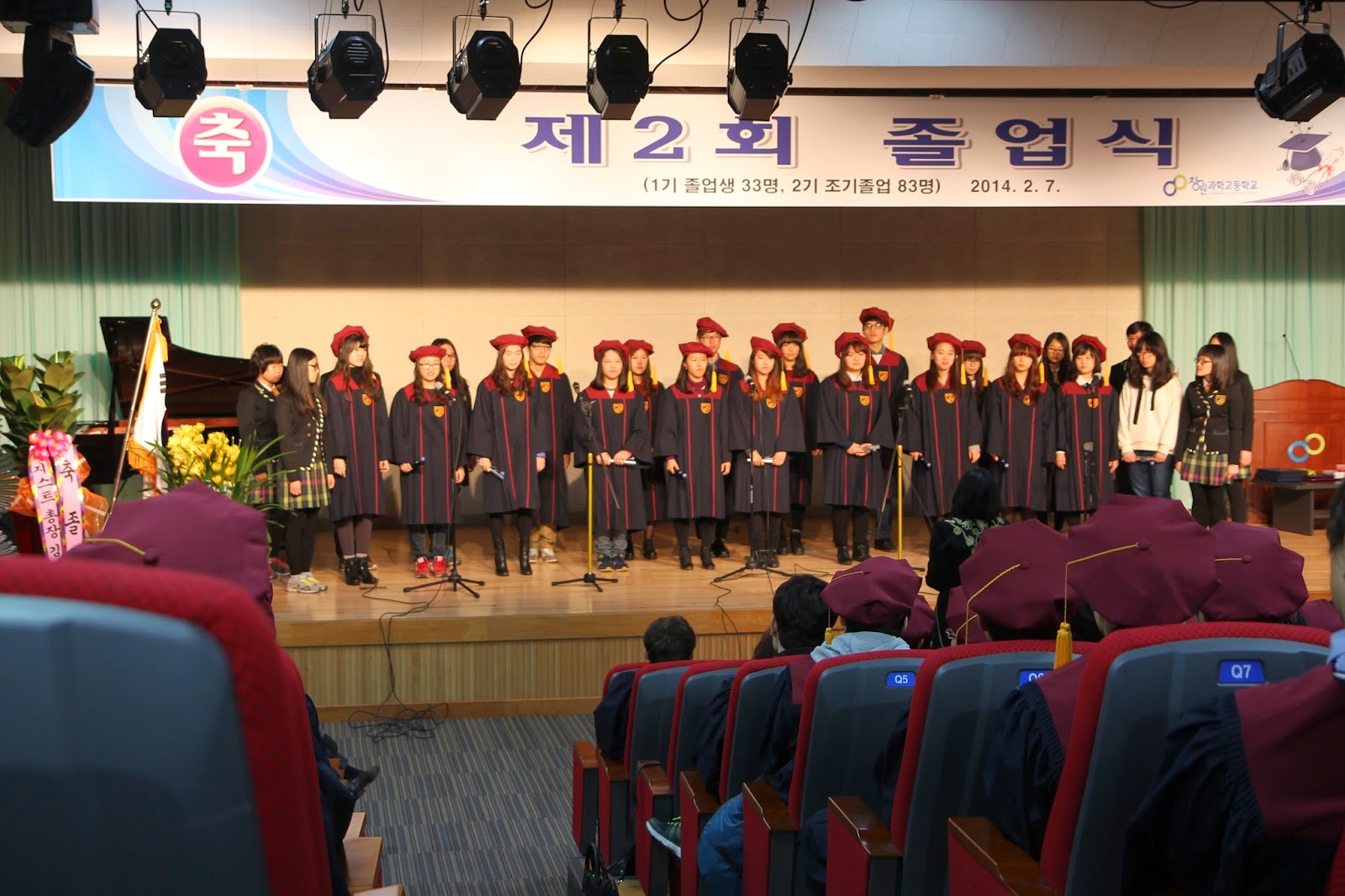
I ran into my homestay father just outside the gates and we walked into the auditorium together, just minutes before they began calling the names of the 113 graduates this year. I was sitting rather far away, but tried snapping photos of my students as they crossed the stage and received their diplomas. As dazed as I was from having traveled 3500 miles in the past 15 hours, it made me smile to see them in their caps and gowns. Most of them had gotten fresh haircuts and perms, ears pierced, eyelids reshaped, the usual. I wasn't even shocked, since I saw the same thing last year.
A scholarship or prize awarded to the four students who were accepted to Seoul National University.
After the roll call, the distribution of special prizes and scholarships, and a speech by the principal(1), there was a special video by the class captains and some teachers. Also, the school choir performed a song as a thank you to their teachers... something about the sky and rainbows and never forgetting a kindness shown.
Most of the choir is graduating, as you can see! I hope they can continue next year; they sounded wonderful.
Then, the ceremony was over and everything descended into mad chaos for photos, just like graduation is supposed to be! I snagged a few of my favorite students for photos, but there was no way I'd be able to catch them all. When I did manage to have a brief conversation in between their being pulled away for more selcas(2), I asked them, "So how do you feel right now?"

"Awesome," they said.
"Nervous."
"Happy, but also sad."
"Nice."
"Exciting."(3)

And MG said to me, "Well, I don't know. Right now, I don't have any feelings, but I think later, when I think about it, it will be amazing."

And I said to all of them, "Congratulations. I'm very proud of you. Come back to visit, okay?"
The 33 graduating third-years, plus their peers who graduated (early) last year and returned today for a long-awaited reunion. I chatted happily with my old students; they were ecstatic that everyone in their original matriculating class was finally moving on to the next big thing. Alas, I had forgotten many of their names and faces...
It hasn't hit me yet that this was the last time I'll see many of them. I might not be around for graduation next year, when they'll return to reunite with their eight peers who are to move on to the third grade. So how could I say goodbye? I simply didn't. I hope my former students do find me on Facebook or Kakao, actually, because this group was really something special, and I want to keep in touch. And those are all my feelings right now.
My homestay sister graduated today! And she's off to one of Korea's finest universities. I'm very proud of her.
- - -
(1)  Which I didn't understand, but was likely about how proud he was that 90% of the second-year students are graduating early and going to really great schools -- I don't have the actual statistics, but I'll get my hands on a program later.
(2) 셀카/Konglish for "selfie"
(3) Eh, this grammar problem will never go away...

Friday, January 24, 2014

My Korean Students Speak

Korean Students Speak is a neat photo project that a fellow Fulbrighter began two years ago. The premise is simple: English education in South Korea focuses on skills for standardized testing and rarely offers students the opportunity for self-expression, so we foreign English teachers give them just that. A blank sheet of paper and the freedom to write whatever they desire. Then, we share these writings with the world.

I'd been itching to do KSS with my students for a long time, and finally I incorporated it into a unit on "speaking up" last semester. The lessons were centered around the power of words to build people up, bring people down, and change the world. On the day I introduced the project, some students took this idea to heart and wrote inspiring, meaningful messages to share. Other students wrote, "I need more time to sleep!" But every student wrote something.

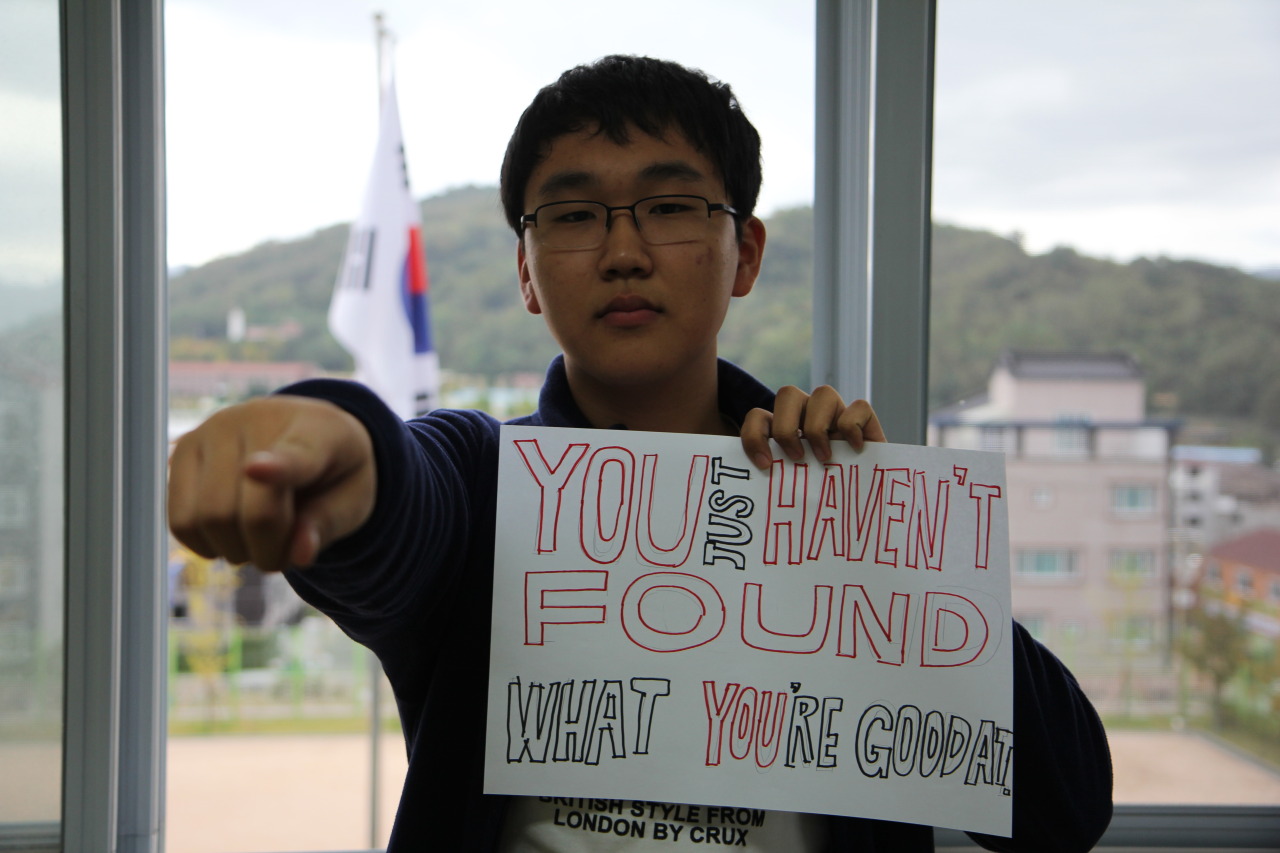
Now, a few months after I submitted my students' work, they've begun showing up on the website! I'm quite excited to see them, and I'm thrilled that a handful are getting large response from the tumblr community (over 1500 notes!). My favorite so far has really struck a chord with the blog's audience:
"You just haven't found what you're good at."
Visit Korean Students Speak to see thousands more funny, wise, moving, or random sayings!

Wednesday, January 22, 2014

Seijin no Hi (成人の日)

Young women wearing kimono for Coming-of-Age Day.
My last half-day in Japan happened to be a national holiday called Seijin no Hi (成人の日), or Coming-of-Age Day. The age of majority in Japan is 20 years, so on the second Monday of every January, every Japanese boy or girl who has turned or will turn 20 that year goes back to their hometown for a traditional ceremony and reunions with family and friends. During the ceremony, called seijin-shiki, they are conferred the rights and responsibilities of adult men and women.

I tried not to look like a stalker when I took this...
I realized that something special was going on that morning when I noticed some women walking around town dressed in dazzlingly beautiful furisode (a type of kimono), white furs around their shoulders and hair done up with flowers and beads.

Erik explained that women wear traditional dress and often spend huge sums of money on their outfit, hair, and makeup. The young men can also wear male kimonos, but the recent trend is for them to don trendy Western-style suits, sometimes in bright colors. However, for a male to wear a kimono sometimes flags him as an outmoded "country bumpkin" of sorts. This of course depends on the city and the culture.

I was impressed with the idea of going back to one's hometown just for this one special day. Not everyone does, of course, but in smaller towns it's a great chance to see high school friends again, and in larger towns it might seem like a big party. In fact, I was overwhelmed when I arrived in Fukuoka to take the ferry back to Korea. Fukuoka is Japan's sixth largest city, with a population of near 1.5 million, and it seemed like all of Fukuoka's twenty-year-olds had gathered at one convention center. The convention center was coincidentally located right next to the ferry terminal, so my bus ran into tons of traffic in the early afternoon. In fact, my bus, and many others that I saw, was full of young men in suits and young women in kimonos. After they got off, a full-to-bursting bus was left with just a Korean family and me. I took many photos of the enormous crowd from the bus, but after it turned the corner for the ferry building, I lost sight of them...

And that was my final impression of Japan! I was fortunate to catch a glimpse of Seijin no Hi before I left. I'm not aware of any similar ceremony in Korea, and I certainly did not take part in anything so official or culturally significant when I turned 18 or 21. I'm 23 now (25 according to the Korean method of counting age... 아이구...), and I do feel like an adult, although there's still a lot left for me to learn about independence. Being in my early twenties is about striking the right balance between taking charge of my own life and honoring my parents and upbringing. There isn't really any moment, any one day, that one can point to and say, "I grew up that day." It's a never-ending process.
I took this from the bus. Tons of adults-to-be gathered at a convention center in Fukuoka for their seijin-shiki. I spy some guys in kimonos! And mullets...

Translate